Food and drink
Moravian wine and the glass pipe
What the unlimited wine, the Becherovka and the glass pipes mean at a Prague folk evening, with the story of Moravian wine cellars.
Book the cellar evening ↗Quick answer
The wine at this evening is served in special glass pipes of the kind used in the wine cellars of South Moravia, the region that grows most of the Czech Republic's grapes. The ticket also includes Becherovka, a herbal bitter from Karlovy Vary, unlimited wine, beer, soft drinks and coffee, and a glass of sparkling wine.
What is on the ticket
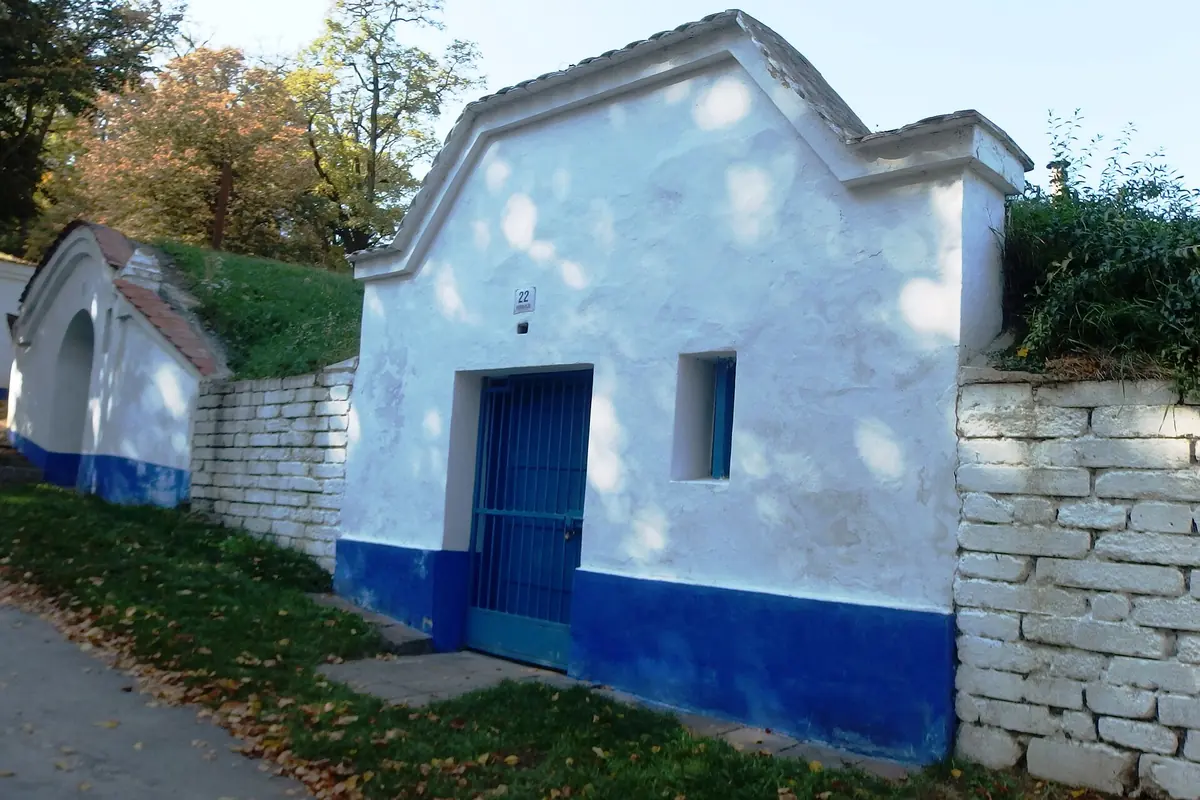
The booking page lists dinner and drinks with the pickup. The drinks are Becherovka as an aperitif, unlimited wine, beer, soft drinks and coffee, and a glass of sparkling wine, and the wine is served in special glass pipes used in the wine cellars of Southern Moravia. No menu is given here because dishes change. The photograph shows traditional wine cellars in Petrov, South Moravia, and not the Prague cellar of this evening.
Moravia, the wine country
Wikipedia says Moravia accounts for around 96 percent of the Czech Republic's vineyards, and that Czech wine law recognises two regions, Moravia and Bohemia. Moravia is centred on southern Moravia, around the Dyje river. The article says production centres on local grape varieties, that wine intertwined with local culture has made Moravia a key wine tourism destination, and that wine villages are known for harvest festivals in September.
Wine and the cellar tradition
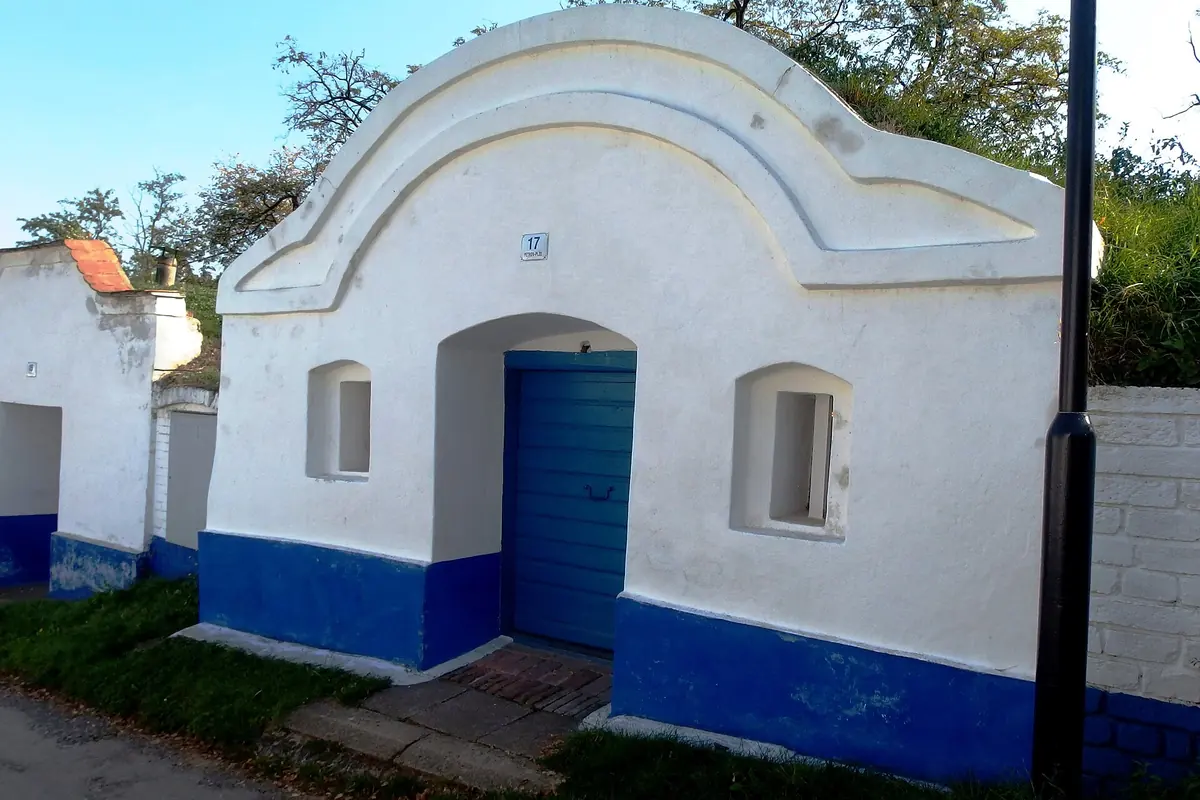
Wikipedia's entry on Moravian Slovakia calls the region known for its folklore, music, wine, costumes and traditions, so wine and music appear side by side in its description. The article on Czech wine shows traditional wine cellars in Petrov, near Strážnice. A cellar evening with folk music pairs the two. This evening happens in a Prague cellar, not in Moravia, so the setting is borrowed and only the idea is Moravian.
The glass pipe
The booking page says the wine is served in special glass pipes, used in the wine cellars of Southern Moravia. Wikipedia describes a wine thief as a pipette, a glass or food-grade plastic tube used in wine making to draw a small sample from a cask. The booking page does not say the pipes serve the same purpose here, so call them glass pipes and expect an unusual way of pouring wine.
Becherovka
Wikipedia describes Becherovka as a herbal bitters produced in Karlovy Vary by the Jan Becher company, with a secret recipe using more than twenty herbs and spices and an alcohol content of 38 percent. It says it is often drunk as a digestif and usually served chilled, and that some serve it with tonic water as a drink called a beton. The booking page lists it as the aperitif, so it opens the evening as a small, strong, herbal drink.
Beer, wine and the Czech table
Wikipedia says the Czech Republic has the highest per-capita consumption of beer in the world and that meals are often accompanied by beer or wine. It adds that Czechia produces wine mostly in Moravia. The ticket's unlimited wine and beer therefore matches the cuisine as well as the evening. Pace yourself: the evening lasts about three hours, and the operator drives you back, so the return needs no plan.
Who this isn't for
If you want a wine tasting with notes on grapes and vintages, this is not one: the wine is part of a folk evening, and the booking page names no producer or grape. If you do not drink alcohol, soft drinks and coffee are unlimited, but the Becherovka and sparkling wine are alcoholic. Contact the operator before your date about dietary needs. The main guide describes the whole evening.
Read next: Folk evening in a Prague cellar
Frequently asked questions
What are the glass pipes?
The booking page says the wine is served in special glass pipes used in the wine cellars of Southern Moravia.
Is the wine really unlimited?
Yes. The ticket lists unlimited wine, beer, soft drinks and coffee, plus Becherovka and a glass of sparkling wine.
What is Becherovka?
A Czech herbal bitter made in Karlovy Vary, 38 percent alcohol according to Wikipedia. The booking page lists it as the aperitif.
Sources