The music
Dulcimer, fujara and bagpipe
The old folk instruments at a Czech folk evening: the hammer dulcimer or cimbalom, the fujara shepherd's pipe and the bagpipe, and where each comes from.
Book the cellar evening ↗Quick answer
The booking page names three old folk instruments: the hammer dulcimer, the fujara and the bagpipe. The dulcimer is a struck-string instrument, called the cimbalom in Moravia. The fujara is a very long shepherd's pipe from central Slovakia that UNESCO lists. The bagpipe feeds reeds from a bag, and Strakonice holds a bagpipe festival every two years.
What the booking page promises
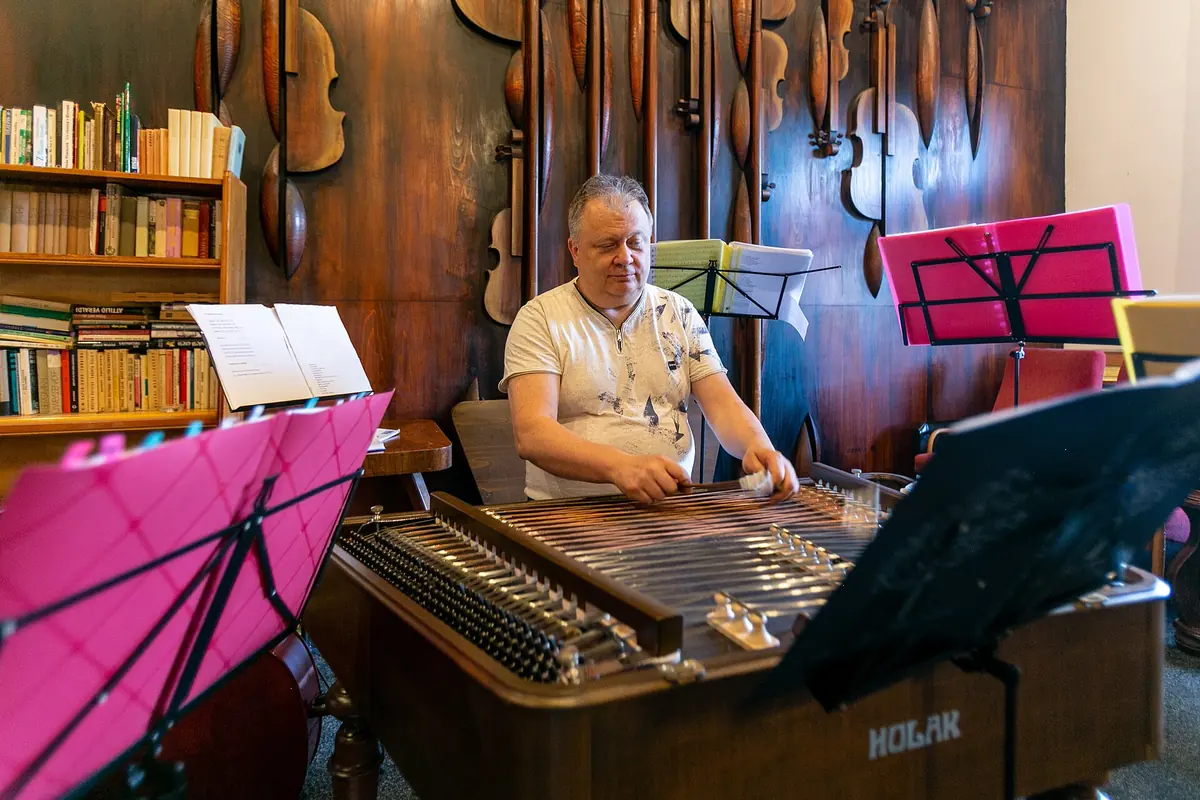
Four musicians play all evening, and the booking page promises the sounds of typical folk instruments such as the hammer dulcimer, the fujara, described as a shepherd's whistle, and the bagpipe. It does not list the rest, and the programme varies with the mood of the guests, so treat this guide as background to three instruments you may hear. The photograph shows a cimbalom player at a concert in Ostrava, not the musicians of this evening.
The hammer dulcimer and the cimbalom
Wikipedia calls hammered dulcimers percussion-string instruments struck with small spoon-like mallets or hammers held in each hand, traditionally played across much of Europe. The cimbalom is the Central European form, and Wikipedia describes it as a large trapezoidal box on legs with metal strings and a damping pedal. It says the instrument is used foremost in Moravia and is a core instrument of Moravian traditional ensembles, played with double bass, clarinet and violins.
The fujara
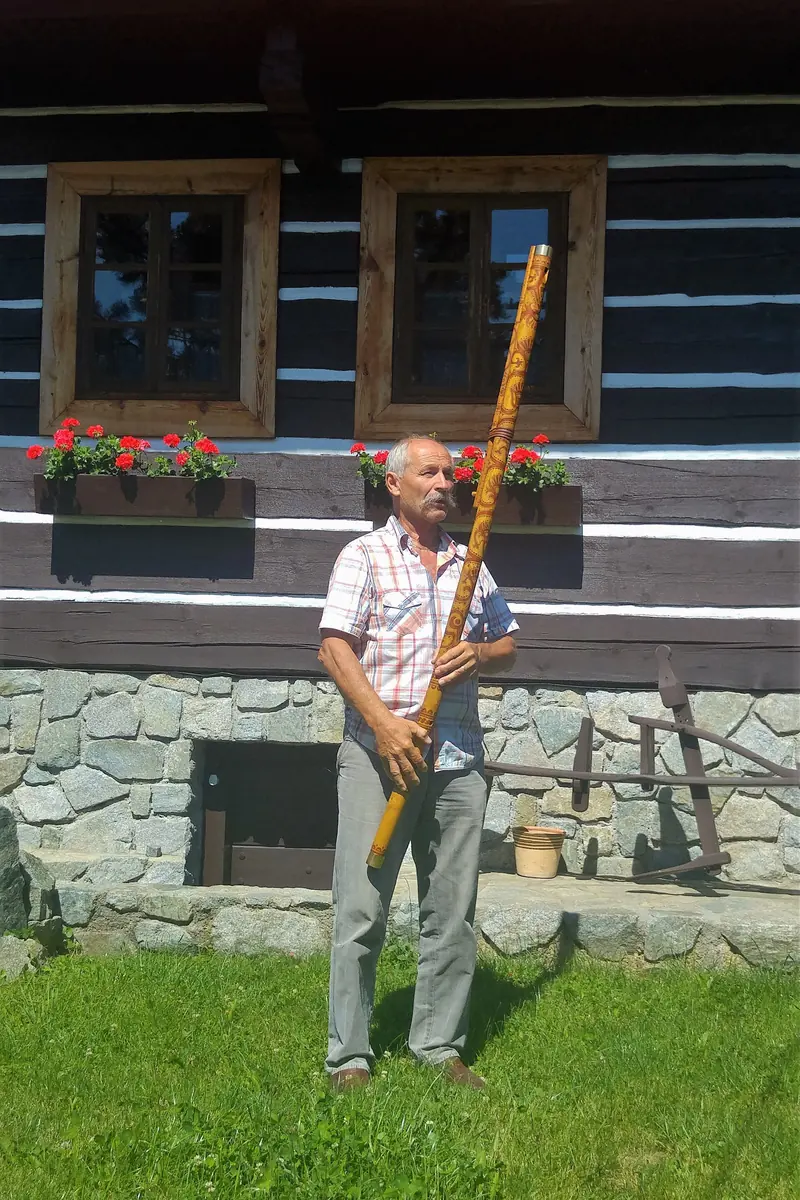
Wikipedia says the fujara is a large wind instrument that originated in central Slovakia as a folk shepherd's instrument. It ranges from 160 to 200 centimetres long, is played standing, held upright and braced against the right thigh, and makes its sound by overblowing. Traditionally it was played by shepherds for recreation. UNESCO added it to its Masterpieces list in 2005, and in 2008 added The Fujara and its Music to its Representative List. The photograph shows a Slovak instrument maker with his pipes.
The bagpipe
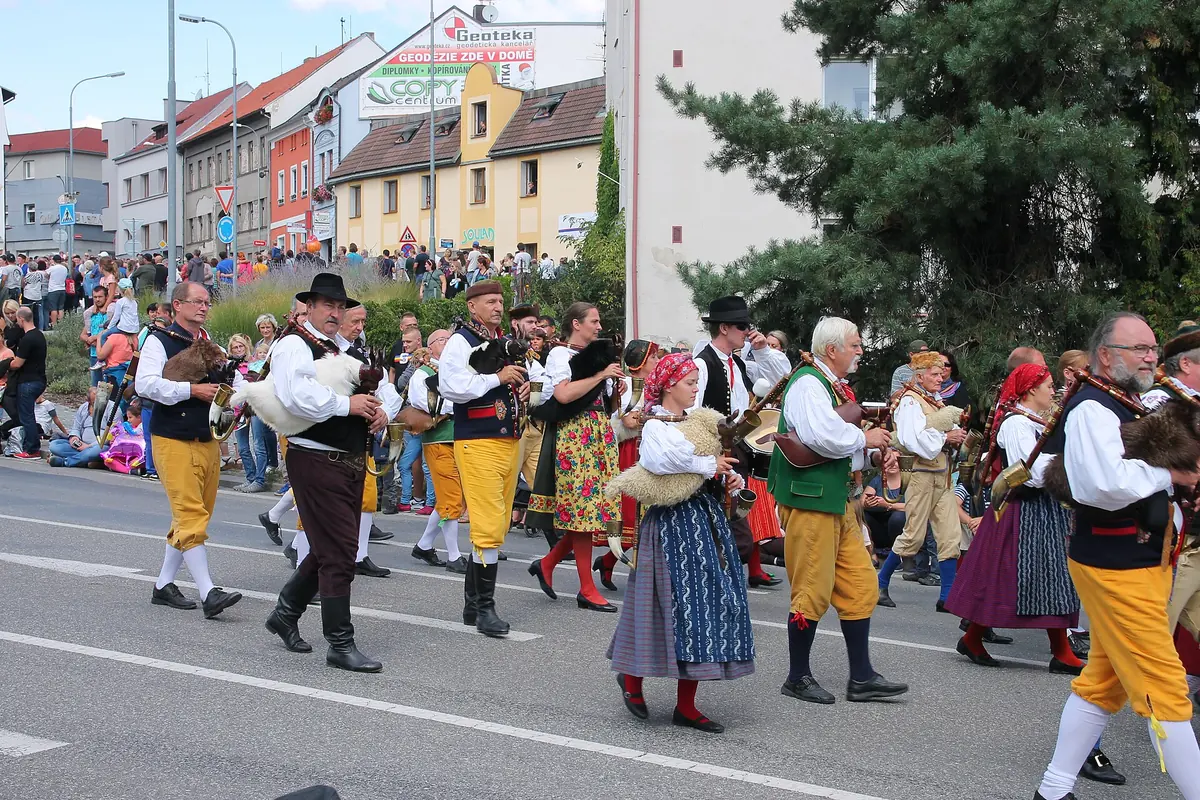
Wikipedia defines the bagpipe as a woodwind instrument using enclosed reeds fed from a constant reservoir of air in a bag. The chanter carries the melody and is fingered with both hands, and the drone gives a constant harmonising note. Wikipedia says the International Bagpipe Festival is held every two years in Strakonice in the Czech Republic. The photograph shows the closing parade of that festival in 2018, with bagpipers in regional costume, and not the musicians of this evening.
Why these instruments belong together
Wikipedia's entry on Czech folklore lists the violin, double bass, bagpipes, shepherd's pipe, dulcimer and trumpet among the instruments of Czech folk music, and says songs addressed everyday life and were passed on orally. Wikipedia's entry on Music of Slovakia says the fujara and Slovak bagpipes existed in the fifteenth century. A programme of Bohemian, Moravian and Slovak songs therefore draws on instruments from all three traditions, played by four musicians.
What to listen for
Listen for the contrast between a struck string and a blown pipe. The dulcimer is bright and quick, with notes that ring and fade. The bagpipe sustains one steady sound under the melody. The fujara is the strangest, a low, breathy tone from a pipe taller than a person. If a musician plays more than one instrument in the evening, notice how the same tune changes with each. The mood of the room decides the pace, so you may hear some pieces slow and some fast.
Who this isn't for
If you want a named virtuoso on a single instrument, a cellar evening is not that. The musicians play a mixed programme for a group that is invited to sing and dance, and the booking page does not promise which instrument appears when. If you only want to hear the classical works, the closing set is short. The main guide to the evening describes the full order from pickup to the ride home.
Read next: Folk evening in a Prague cellar
Frequently asked questions
What is a fujara?
A very long wind instrument from central Slovakia, 160 to 200 centimetres in length, traditionally played by shepherds. UNESCO lists it as intangible heritage.
What is the cimbalom?
The cimbalom is a large hammered dulcimer, struck with mallets. Wikipedia says it is a core instrument of Moravian traditional music.
Will I definitely hear a bagpipe?
The booking page names the bagpipe among typical folk instruments, but the programme varies with the mood of the guests, so no instrument is guaranteed on a given night.
Sources